Published on November 20, 2025
Where does the term "brunch" come from?
For those who aren’t yet familiar with the concept of brunch, it’s a meal where dishes usually served at breakfast are enjoyed around lunchtime. But where does the word brunch come from?
Origin
The term was created by merging two English words: breakfast and lunch, which together formed brunch. Today, it’s common to hear different variations of the word, including the verb to brunch—or in French, bruncher.

Its history
Historically, brunch is credited to the Anglo-Saxons in the 1800s. At first, it appeared in an English dictionary as the meal of choice for Saturday-night revelers recovering the next day. By the 1930s, the term had grown in popularity and eventually became a well-loved meal enjoyed all around the world.
Depending on the place, brunch habits differ. New Yorkers, for example, often choose pastries paired with a glass of champagne—nothing less! In Dubai, brunch typically starts at noon on Fridays and continues late into the night. Meanwhile, the traditional English brunch is much closer to Quebec customs, with eggs, bacon, muffins, and of course, tea.
In Quebec
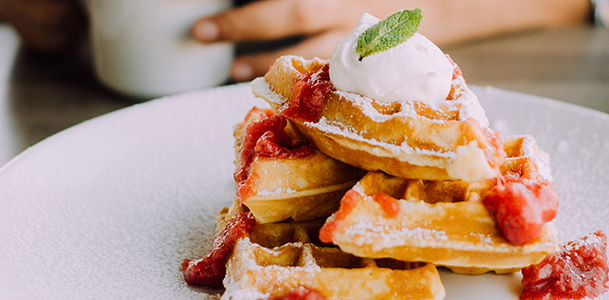
In Quebec, there are no strict rules when it comes to brunch. You can expect both sweet and savory dishes: crêpes, waffles, sausages, eggs, baked beans—all generously topped with maple syrup!