Published on November 20, 2025
Quebec’s green sea urchin: an overlooked marine treasure
Every winter, when the St. Lawrence River freezes halfway and Quebec’s coastal villages slow down with the cold season, a little-known but precious fishery comes to life: the harvest of the green sea urchin. Small, spiny, and surprising, this seafood is still a discreet gem in Quebec gastronomy, yet it’s gaining momentum among chefs and lovers of exceptional marine products.
A discreet resident of the St. Lawrence
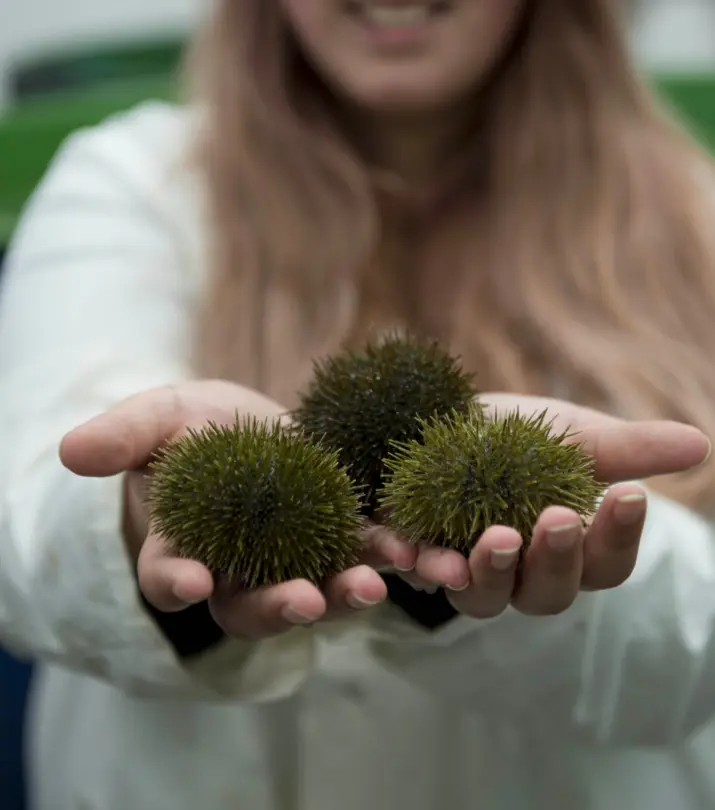
The green sea urchin (Strongylocentrotus droebachiensis) is a small echinoderm (a cousin of the starfish) that carpets the rocky and kelp-covered seabeds of the St. Lawrence, especially along the North Shore, the Magdalen Islands, and the Gaspé Peninsula. It’s easy to recognize by its thin olive-green, sometimes brownish spines that sway slowly with the animal’s movements.
It typically lives 5 to 10 years—sometimes longer—and feeds mainly on algae such as kelp. It’s precisely in these cold, nutrient-rich waters that it develops a unique flavor, quite different from its Mediterranean or Japanese counterparts.
A winter harvest
Unlike most seafood enjoyed in summer, green sea urchins are harvested from November to March. This winter season is strategic: it’s when the urchin is at its fullest and its gonad (the edible part, often called the “roe”) reaches its peak quality.
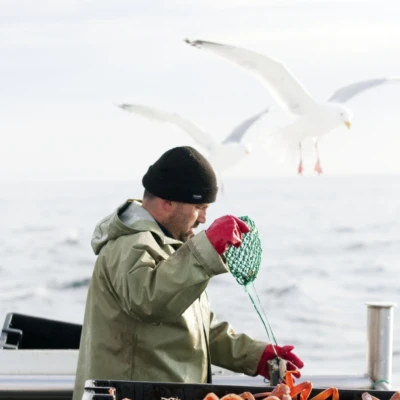
The harvest is done mostly by hand, through diving—an exacting yet environmentally respectful method. Imagine a diver in a dry suit plunging into near-freezing waters, feeling around for urchins hidden among rocks, sometimes beneath a layer of ice. It’s an activity that is both perilous and poetic.
A briny, buttery, intense taste
Quebec’s green sea urchin has a subtle yet pronounced flavor. First-timers are often surprised by its creamy texture and briny, almost sweet taste, with notes of hazelnut, butter, and sometimes a slight marine bitterness.
It is often eaten raw, straight from the shell with a spoon, much like an oyster. For enthusiasts, it's a sensory experience—almost meditative. Chefs transform it into mousse, sauces, risotto toppings, or tartare.
In certain restaurants in Montréal or Quebec City, you might even find an “urchin shooter” served in the shell with a splash of lemon or sake. In the Magdalen Islands, it’s even used in breakfast omelets—a delicious local tradition.
Surprising nutritional benefits
Beyond its refined taste, the green sea urchin is nutritionally impressive. It is an excellent source of high-quality protein and essential minerals such as zinc and iron. Most notably, it’s naturally rich in omega-3 fatty acids—well known for supporting cardiovascular health.
Enjoying green sea urchin is not only a gourmet pleasure but also a nourishing choice that blends indulgence with well-being.
A rare but promising product
Green sea urchin from Quebec remains a niche product. Less popular than mussels or northern shrimp, it is nevertheless gaining recognition thanks to the dedication of small-scale fishers and organizations promoting local marine products.
The challenge, for now, lies in processing and distribution. Because urchins are delicate and freshness is essential, they require a short supply chain from harvest to plate. Some companies have begun offering cleaned, ready-to-eat urchins sold directly to chefs or through specialized markets.
An accessible luxury… For now
Although considered a refined delicacy, Quebec’s green sea urchin remains relatively affordable—for now. You can find it in certain local fish markets during winter or enjoy it during special tasting events. It would be a shame to save it only for special occasions: it deserves to be discovered, embraced, and perhaps featured in your next maritime-inspired brunch.
In Conclusion
Quebec’s green sea urchin is still unfamiliar to many, but it fully deserves a place among the marine treasures of our territory. Behind this small echinoderm lies a rigorous craft, a sustainable fishery, and undeniable gastronomic and nutritional richness.
Whether eaten simply or elevated by chefs, it offers a unique opportunity to discover a local product deeply rooted in the cold waters of the St. Lawrence.
Cover photo: Manoir Hovey - Le Hatley