Published on November 20, 2025
What you should know about ground cherries
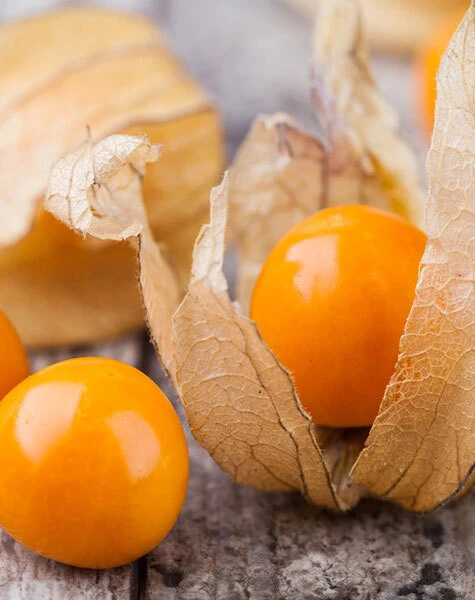
You may know this small fruit better as the ground cherry. Its scientific name is physalis, but it’s also sometimes called Cape gooseberry or Chinese lantern. Bright yellow, almost orange, the fruit is hidden inside a husk with a texture similar to tissue paper.
Characteristics
Physalis belong to the same family as tomatoes, the Solanaceae. This small fruit is not widely consumed by the public, yet it deserves to be known for its delicate, sweet-tart flavor.
There are about a hundred species of physalis, found in tropical, subtropical, and temperate regions around the world.
Did you know? When the ground cherry is ripe, it falls to the ground—hence its name.
Season
Ground cherries are available at markets in summer and fall, from August to October.
Benefits
Physalis contain beta-carotene, an antioxidant that can be converted into vitamin A in the body. They are also a good source of vitamin C, important for iron absorption and known for its antioxidant properties.
Buying and Storage
When selecting ground cherries, they should be well-wrapped in their husks. The drier the husks, the better the fruit.
Physalis can be stored in the refrigerator for several weeks, even up to 2–3 months. If the husks are opened or damaged, they should be kept refrigerated and consumed within 10 days.
They can also be frozen on a baking sheet for about 2 hours. Then transfer them to a freezer bag. They will keep in the freezer for several months.
Culinary Tips
Ground cherries are often used as decoration on dessert plates. They are delicious in fruit salads or dipped in chocolate.
Physalis can also be cooked into jams, crisps, and clafoutis.
Additionally, ground cherries can be used like green tomatoes in salsas, ketchup, or chutneys. Try them in a salsa with cherry tomatoes, red onion, jalapeño, and cilantro over baked trout.