HopEra: The Art of Pairing Pizza, Beer and Local Ingredients
Portrait and StoryFeatured Restaurant
In Jonquière, in the heart of Saguenay–Lac-Saint-Jean, the microbrewery and pizzeria HopEra stands out for its craft beers, its famous wood-fired pizzas… and its strong commitment to local ingredients. Every dish and every beer is designed to highlight the work of regional producers.
We spoke with Vladimir Antonoff, co-owner and beer sommelier, and Maxim Émond, the restaurant’s chef, about their attachment to Québec ingredients and the evolution of a creative establishment deeply rooted in its community.
Since 2014, the Aliments du Québec au menu program has brought together restaurants that prioritize local ingredients and showcase Québec producers. In celebration of the program’s 10th anniversary, dive into inspiring stories of restaurateurs and savor the local passion that drives them.
Vladimir Antonoff, copropriétaire et sommelier bière, et Maxim Émond, chef de HopEra
How did HopEra come to life, Vladimir?
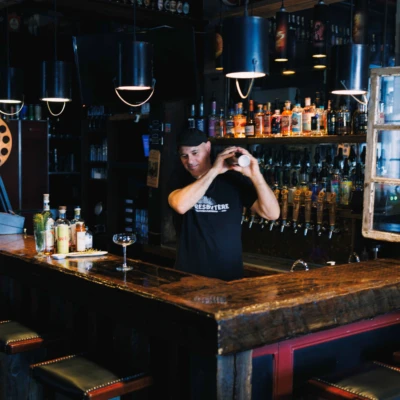
Vladimir: HopEra was founded in June 2014, driven by my passion for brewing and that of my partners, Patrick Voyer and Karyne Samson. Initially, our goal was to introduce people to craft beer culture. Very quickly, we added a food offering with wood-fired pizzas so customers could enjoy gourmet dishes while discovering new beer styles brewed on-site. Over time, the kitchen expanded and our mission evolved.
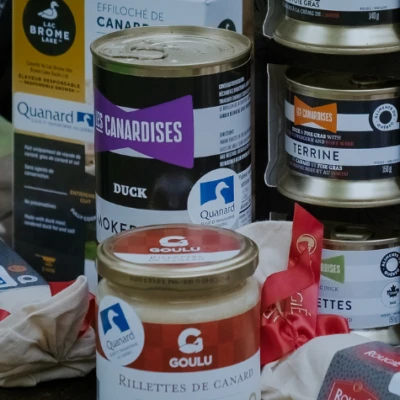
Today, it’s essential for us to promote local partnerships and ensure that our customers enjoy high-quality local products—whether through our beers, spirits, or plates. While wood-fired pizza—with the best homemade dough!—remains our specialty, our menu evolves weekly with chalkboard features showcasing Québec ingredients: meats, boreal spices, seaweed, berries, condiments… Some of the businesses we proudly feature include Fromagerie Blackburn, Ferme Villoise, Ail du Moulin, Canards du Lac Brome, and more.
“It’s essential for us to promote local partnerships and ensure our customers enjoy quality local products—through our beers, spirits, or dishes.”
— Vladimir Antonoff, co-owner and beer sommelier
Why the name HopEra?
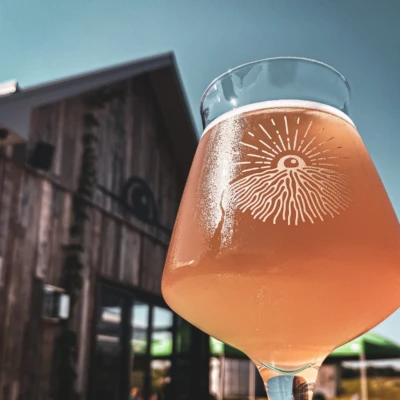
Vladimir: The name came at the last minute thanks to a friend. He suggested “Hop” (for hops) and “Era,” and the sound of HopEra inspired the logo: the Phantom of the Opera mask resting on a hop cone.
Where does your passion for brewing come from?
Vladimir: My passion began about 20 years ago, shortly after arriving in Québec, when a specialty shop owner convinced me to try a microbrew instead of a commercial beer… it was a revelation! I later worked in a specialty beer bar, for microbreweries at festivals, and as a writer for Bières et Plaisirs. Since opening HopEra in 2014, I’ve continued the same mission: democratizing Québec craft beer, pairing it with local ingredients, and encouraging people to buy local—whether as a festival spokesperson (in Québec and France), a tasting instructor, or a radio columnist for over 11 years on Énergie 94.5 in Saguenay–Lac-Saint-Jean.
Maxim, tell us about your first steps in the kitchen.
Maxim: I started at 15 as a dishwasher in a restaurant chain. My first experience cooking wasn’t conclusive… but after a few odd jobs, I rediscovered my passion when I joined HopEra as a cook. I immediately connected with the restaurant’s philosophy: highlighting local products, creating, constantly learning. Gradually, I gained confidence, developed my own style, and became chef. It’s a role that allows me to push the boundaries of my creativity.
What motivates you most in the restaurant industry?
Maxim: The constant desire to learn, create, share, and give my best every day. Even after 10 years, every ingredient and every season offers a new opportunity to experiment and innovate. Discovering new products and techniques keeps the flame alive. And honestly, there’s nothing more motivating than seeing a customer smile after tasting one of our creations. That’s the greatest recognition we can receive.
“Each ingredient, each season offers me a new opportunity to experiment and innovate.” — Maxim Émond, chef
How do your relationships with local producers influence your creations?
Maxim: It all starts with meeting people. Every ingredient has a story, a face, and that connection with producers guides us just as much as product quality. Through Zone Boréale events, farm visits, and word of mouth, we’ve built strong relationships over the years. After ten years in business, more and more producers come to us spontaneously to present their creations.
We prioritize nearby suppliers to reduce our ecological footprint and encourage direct sourcing. Knowing the work behind an ingredient naturally pushes us to showcase it—often, it’s the starting point of a recipe. Sometimes our ideas even surprise producers, who then share them with others. Every partnership is above all a story of trust and friendship, and our menu evolves with the seasons.
How do you communicate the Québec origin of your products?
Maxim: We’re proud to be Zone Boréale Ambassadors and members of Aliments du Québec au menu. Through our servers, social media, and chalkboards, we always highlight the origin of the ingredients in our dishes and beers. And if it inspires a customer to discover a producer—and buy their products—thanks to us, then mission accomplished. People truly embrace this shared desire to support local.
“Knowing the work behind an ingredient naturally pushes us to showcase it… sometimes even change perceptions!” — Maxim ÉmondYour specialty is wood-fired pizza and craft beer. Do you have a perfect pairing?
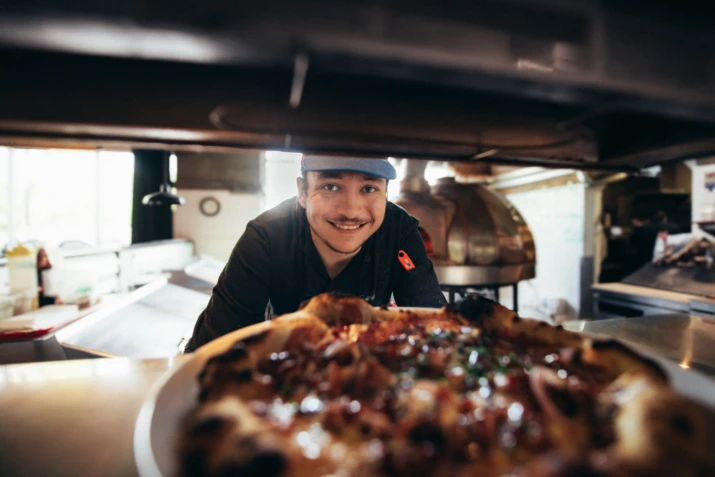
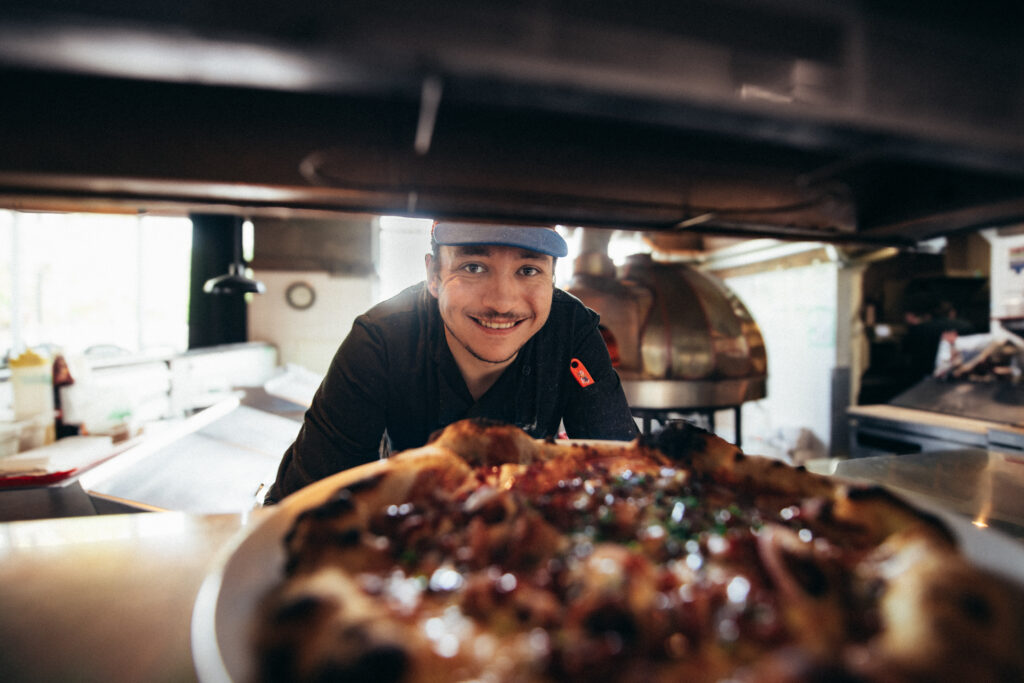
Maxim: Our most popular pizza is the Truck Stop, topped with regional ingredients: smoked pulled pork, smoked bacon, red onion, BBQ sauce, parsley, and mozzarella.
Vladimir: To pair with it, nothing beats our Puptarts Camerise beer—tart with local haskap berries—which balances the richness of the pizza and enhances its smoky, grilled notes.
Your favorite dish in life?
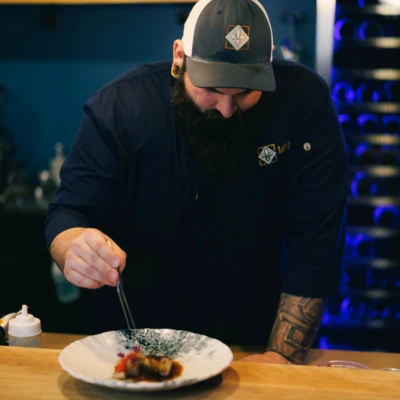
Vladimir: Without hesitation, seafood paired with regional ingredients. My guilty pleasure? Magdalen Islands scallops served with rhubarb water, toasted buckwheat, and sea buckthorn-maple gel.A Québec ingredient you couldn’t live without?
Maxim: Wild mushrooms! We love them. They evolve with the seasons, offer incredible diversity in texture and flavor, and integrate easily into many recipes. We’re lucky to have access to local foragers and processors. By dehydrating or pickling them, we can use them year-round.
A local ingredient that deserves more appreciation?
Maxim: Seaweed! Despite being local, nutritious, and versatile, it’s still underappreciated. At HopEra, we incorporate it into more familiar dishes to spark curiosity. Gradually, we guide customers to discover these flavors in a playful way—then in their pure form. That’s where our role as restaurateurs truly makes sense: to introduce, inform, awaken taste buds… and sometimes even change perceptions!
What’s next for HopEra?
Vladimir: After 10 years, our goal is to stay true to our core values: maintaining the quality and consistency of the dishes that built our reputation, while continuing to innovate and collaborate with as many regional producers as possible. We also want to keep the educational and playful aspect that our customers enjoy, introducing them to new local products. As long as the passion remains within the team, we know we’re moving in the right direction. In ten years, if I still wake up with the same motivation, that will mean we’ve succeeded.
Savour Quebec in every moment!
Discover the full list of restaurants that have received the Aliments du Québec au menu recognition by highlighting local products in their kitchens. There’s something for every taste and every occasion, all across the province!