Published on November 13, 2019
Flour: a 75 000 years old ingredient
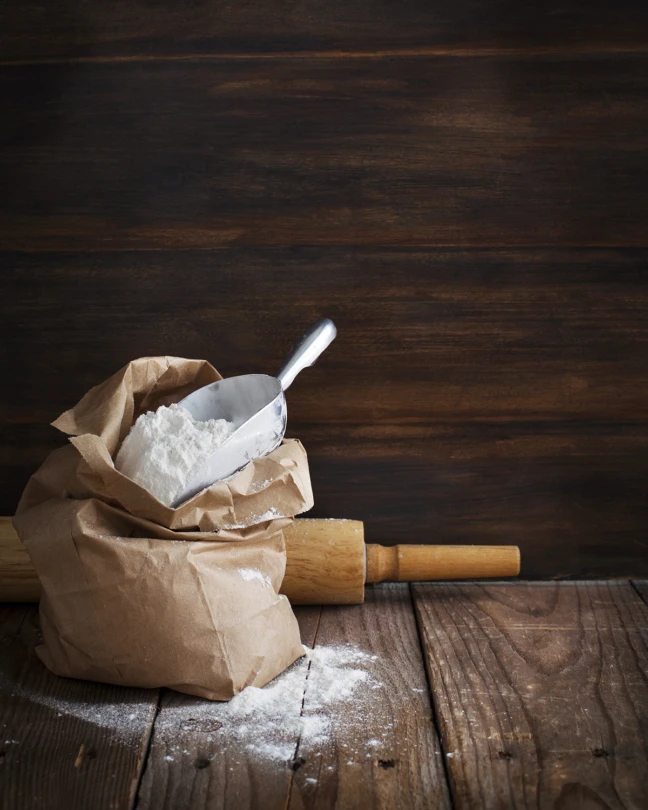
Gone are the days when a single type of flour filled your pantry! Nowadays, every cooking enthusiast has multiple flours in their cupboard: bleached flour, unbleached wheat flour, spelt, hemp, flax, buckwheat, and more. It can be hard to navigate among all these options…
Here’s a guide to the main differences between flours entirely produced in Québec soil, from harvest to milling
Bleached vs. Unbleached Flour
Bleaching wheat flour involves chemicals like chlorine and benzoyl peroxide. While banned in several European countries, its sale is allowed by Health Canada.
The unbleached version is similar but made without chemical treatment. Both come from milling soft or hard wheat. In Canada, both types are enriched with minerals to boost nutritional value — including B vitamins, iron, and folic acid.
Whole Wheat Flour
Made using many components of the wheat — including the fine and coarse bran — whole wheat flour contains more fiber than bleached flour. It’s considered a good source of iron and boosts a recipe’s nutritional profile. Some whole‑wheat flours also contain the wheat germ; when germ is included, it’s often called “whole grain flour.” Because the germ spoils faster, it’s recommended to refrigerate or even freeze it.
Buckwheat Flour
Often used in pancakes or buckwheat galettes, buckwheat flour doesn’t come from wheat: it comes from a hardy flowering plant that’s easy to grow. It’s gluten‑free and provides a good amount of iron and protein.
Spelt Flour
Spelt flour contains proteins and carbohydrates similar to wheat flour. However, it is considered less allergenic than wheat. It’s primarily used in artisanal bread baking, as it is ideal for bread-making. Spelt is often referred to as an ancestor of modern wheat, and is an excellent source of fiber — which may help lower cholesterol and support healthy blood sugar regulation. In processing, the grain hull is removed (dehulling), as only the kernel is edible.
Hemp Flour
Thanks to many nutritional properties, hemp flour is becoming more and more popular. Considered a super‑food, hemp seeds (ground into flour) are rich in healthy fats such as omega‑3 and omega‑6. They also offer very high fibre content, plus abundant vitamins and minerals — quite remarkable for a flour still relatively unknown!
Flax Flour
Made from ground flax seeds, flax flour may strongly support digestive health. Rich in proteins and fiber and low in carbohydrates, flax is a valuable nutritional choice. It's best to store flax flour refrigerated in a sealed container to avoid oxidation.
Corn Flour
Corn flour is a go‑to for gluten‑free baking. With a relatively neutral taste — slightly sweet — it can lend a golden hue to your recipes. It is also high in fibre and contains vitamin A. Who says “Indian corn” is only for traditional corn roasts!