Published on March 5, 2026
Baumier and Lactofermentation: Extending the Enjoyment of Local Foods
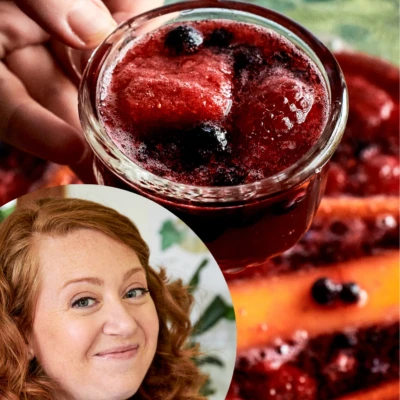
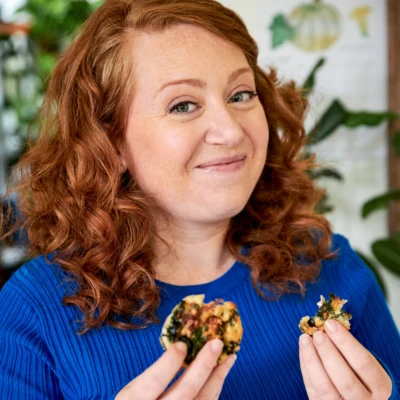
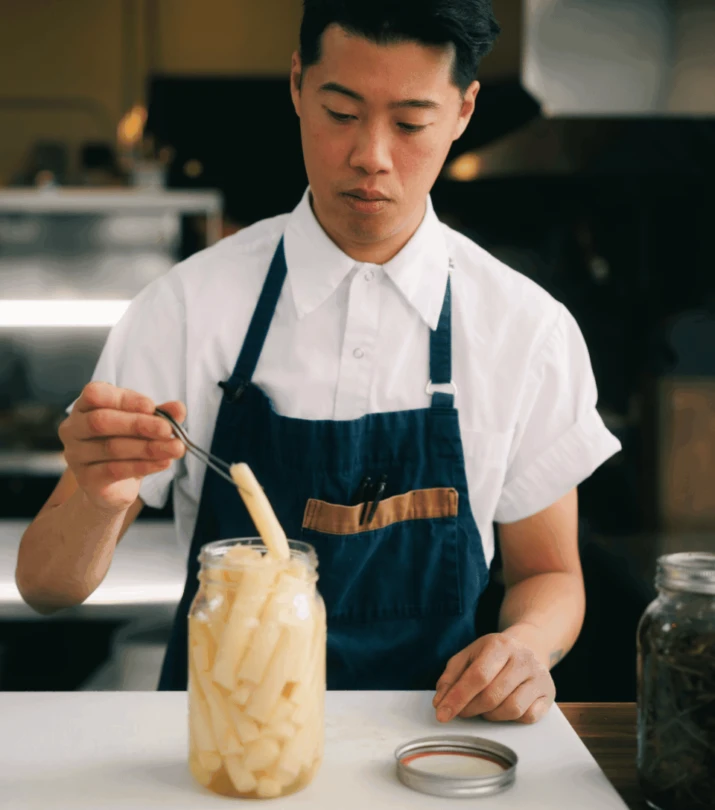
At Baumier, Chef Samuel Boyer and his team channel their passion and expertise into showcasing local products, creating memorable dishes no matter the season. Lacto-fermentation is a perfect example of this approach: a simple preservation technique that extends the shelf life of ingredients while enhancing their flavors. In a short video, Samuel shows us how fresh products can be transformed into delicious reserves to be enjoyed long after harvest—a practice that helped make Baumier a finalist for the Prix Restaurateur 2025 d'Aliments du Québec au menu.
This video was filmed as part of the web series Derrière le menu, which highlights local chefs and the Québec products that inspire their cooking.
An Ancient Technique, Still Relevant
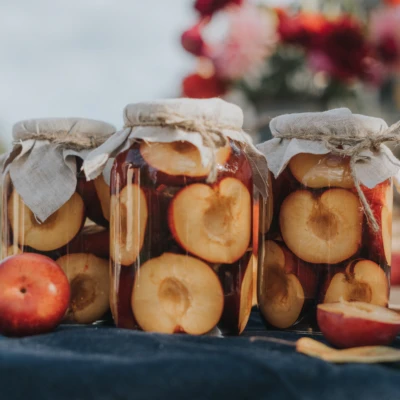
Lacto-fermentation was born out of a practical need: preserving abundant harvests. Long before freezers and canned goods existed, this technique already allowed people to extend the shelf life of their foods. Over time, it gradually fell out of common use, but today it’s being rediscovered for its practicality and benefits.
Understanding Lacto-Fermentation Made Simple
As Samuel explains: “Lacto-fermentation is a natural process where the sugars in foods are transformed into lactic acid. This process improves preservation, aids digestion, and enhances the flavor of foods, often with a pleasantly tangy note.”
The Basics for Successful Lacto-Fermentation
Successful lacto-fermentation relies on a few simple principles and steps:
- Maintain a clean environment: Use clean jars, utensils, and hands to prevent the growth of harmful bacteria.
- Prepare the ingredients: Wash and cut vegetables or fruits according to the recipe.
- Use a brine: Prepare a 2% brine (2 g of salt dissolved in 100 ml of water, or 20 g per liter). Prefer spring water or unchlorinated water to encourage the growth of beneficial bacteria. Fully submerge the ingredients and leave 2–3 cm of space at the top of the jar to allow fermentation to proceed properly.
Fermentation and storage: Keep the ingredients fully submerged and protected from air so that fermentation occurs naturally. Let ferment at room temperature (18–22 °C) for about a week, then transfer to the refrigerator. Fermented foods can be stored in the fridge for several months.

Which Foods Can Be Lacto-Fermented?
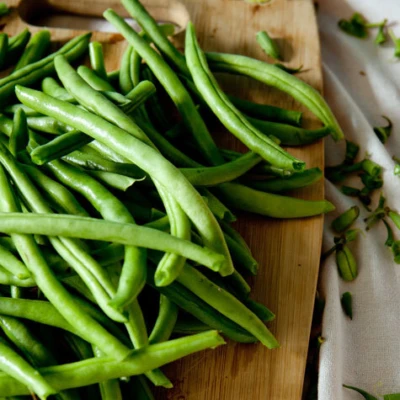
Lacto-fermentation can be applied to a wide variety of foods. At Baumier, Samuel uses it both to preserve ingredients and to create new flavors. He ferments various vegetables (shiitake mushrooms, asparagus, cabbage, potatoes) and some fruits (raspberries, blueberries, cranberries).
An Important Warning
Lacto-fermentation is a safe method when done correctly, but canning requires rigor and caution. It is therefore essential to be well-informed before attempting it. For tips and safety guidelines, consult this trusted resource.
Lacto-fermentation is part of a set of preservation techniques that allow the enjoyment of local foods for longer. So don’t be surprised if, at Baumier, you find local vegetables and fruits served out of season, subtly lacto-fermented. At this restaurant, every plate tells the story of Chef Samuel and his team’s passionate work, inviting you to savor the best of Québec, season after season.
Visiting the Laurentides?
Baumier is a must-visit restaurant!
This video was filmed as part of the web series Derrière le menu, which highlights local chefs and the Québec products that inspire their cooking.