Article conservation des fraises 475x600 1720553750

Published on July 1, 2025

7 Ways to Store Strawberries: We Reveal the Best Method

Tips and Tricks

Preserving Quebec Strawberries : We tested ALL the methods… one hot duel, only one winner!

Quebec’s strawberry season is in full swing. Whether you’re picking your own, visiting a roadside stand, or shopping at the market or grocery store, it’s the perfect time to spot baskets full of these precious, sweet little red fruits.

To keep Quebec strawberries fresh for as long as possible, here are some preservation tips tested for you by Pilar, Digital Marketing Manager at Aliments du Québec. Pilar is a huge strawberry fan and willingly tried out several preservation methods—both well-known and lesser-known—to see which works best.

As we know, Quebec strawberries are more flavorful than imported ones; picked at peak ripeness, full of water and sugar, it’s normal that they’re a bit more delicate. But no worries—there are plenty of ways to extend their shelf life. Pilar will reveal which method is THE tested and approved winner. And if you’re short on time and your strawberries are languishing on the counter, skip ahead to the end of this article!

P.S. No strawberries were harmed during this feature. But many were happily devoured!

1. Strawberries hulled in advance and stored in the refrigerator, cut side down.

Hulling the strawberries in advance seemed like a good way to save time, but I quickly realized I was mistaken. Even when stored in an airtight container, they brown, soften, and become unappetizing in less than 24 hours.

Fraises equeutees planche a decouper

2. Strawberries rinsed and stored on paper towels.

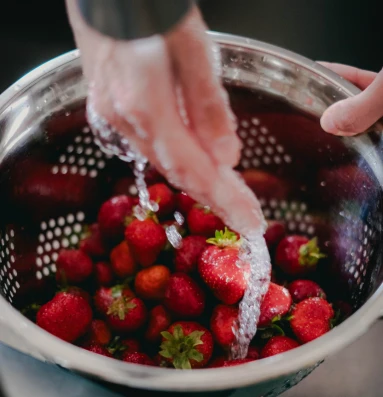
I don’t know about you, but when I get back from the grocery store, I rush to wash everything, especially fruits and vegetables. I wanted to see if washing strawberries would help extend their shelf life. The simple method involves rinsing the strawberries and storing them in a container lined with paper towels, so you can eat them without washing again.

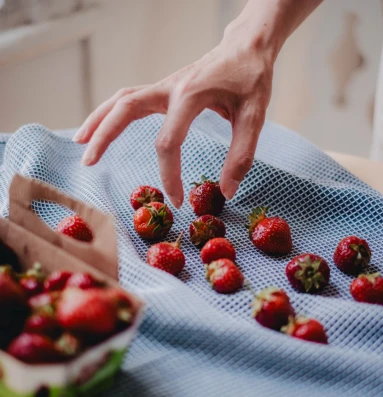
After a week, unfortunately, I noticed that about half of the strawberries had rotted. The paper towels were damp, and the strawberries touching each other seemed to spoil faster.

Conclusion: Wet strawberries deteriorate quickly. Make sure they are completely dry before putting them in the fridge.

Fraises Rincees et stockees sur essuie tout 383x485

3. Strawberries stored in an airtight glass jar.

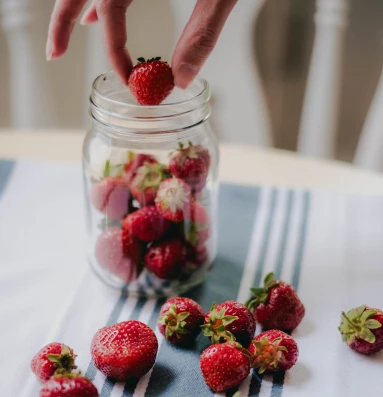
With this method, I simply placed my unwashed strawberries directly into a jar, screwed on the lid, and put it in the fridge.

Results: By the end of the week, I noticed that the jar kept the berries much fresher than leaving them in their original container. However, the strawberries at the bottom of the jar seemed to spoil the fastest, probably because they were bearing the weight of the berries above them. Overall, though, they stayed in good condition, but I should have chosen a larger container.

Fraises stockees dans un bocal de verre

4. Unwashed strawberries stored on paper towels.

Next, I wanted to test whether storing strawberries on paper towels would help keep them fresh longer in an airtight container.

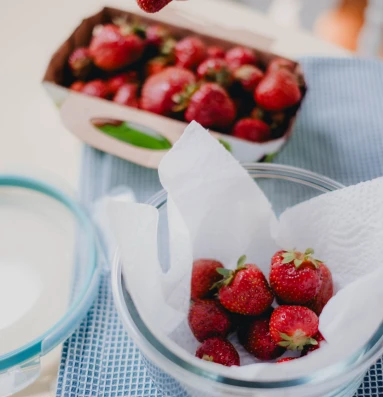
I placed them in a classic Tupperware with a paper towel at the bottom. I could have also used a double layer of paper towels.

Results: By the end of the week, I noticed that the paper towels had absorbed some liquid and were stained red in spots, indicating they had absorbed some of the excess moisture that would have otherwise caused the strawberries to spoil faster. After seven days, only about one-fifth of the berries had gone bad. This method seemed to work much better than storing washed strawberries on paper towels, suggesting that keeping the berries dry plays a significant role in extending their shelf life.

Fraises non lavees et stockees

5. Strawberries sorted and placed back in their original carton.

With this simple method, I first sorted the strawberries, then placed them back in their original container and covered them with plastic wrap to prevent them from drying out in the fridge. This method has the advantage of being easy and quick, and the results are excellent. The container—often made of cardboard or compostable material—keeps the berries much fresher than most other storage methods, and it takes almost no time. Not rinsing the berries ensures they stay dry, and the container allows enough airflow without exposing them to the dry fridge air that can dehydrate strawberries. If you’re in a hurry, leaving the strawberries in their original container works very well.

Fraises triees et remises dans leur carton

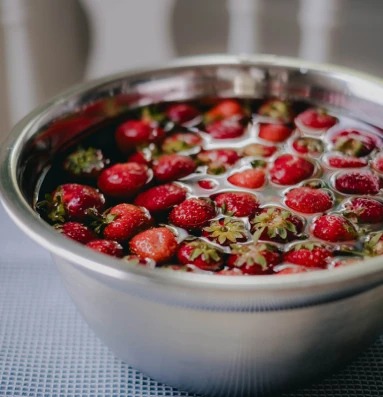
6. Strawberries soaked in a vinegar solution and dried using a salad spinner.

For this technique, you’ll need a bit of time and handling, but trust me—it gave me the best results.

First, the strawberry bath: In a large bowl, mix 3 parts water to 1 part vinegar.

Gently pour in the strawberries and let them soak for a few minutes.

Next, rinse the strawberries with cold water and dry them using a salad spinner lined with a paper towel at the bottom. The spinner will remove the water, but be careful—not too much force! These little berries are fragile.

Once your strawberries are clean and dry, transfer them to an airtight container, again with a paper towel at the bottom. By now, you’ll understand that this is an essential step to prolong their life.

Then, put on the lid without sealing it completely, or use a Tupperware-type container with an air vent.

This method will help keep your strawberries fresh for several extra days!

Fraises trempees dans une solution de vinaigre

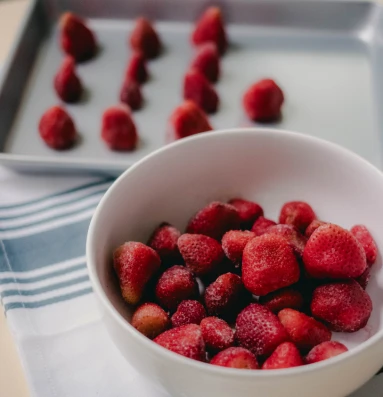
7. Freezing Strawberries

Now that I know how to better preserve my strawberries, I’ll wrap up this post with a little tip for freezing them. Here’s a single, foolproof method that gives excellent results.

Step 1: Wash the strawberries! No need to be shy—rinse them under water, gently pat them dry, and hull them.

Next, spread the strawberries on baking sheets (lined with parchment paper or a silicone mat to prevent sticking) and freeze them for at least 3 hours, or until firm. Then transfer them into freezer bags (removing the air with a straw) or airtight containers. Finally, make sure to label the date and quantity.

Strawberries can be stored in the freezer for up to 6 months. Then, in the middle of February, when it’s –17°C outside and you have an irresistible craving for strawberry crisp, you can enjoy that taste of summer. Since frozen strawberries release more water than fresh ones, add 1–2 tablespoons of cornstarch to absorb the excess liquid, or let them thaw for a few hours before using and discard (or drink!) the extra juice.

Fraises congelation